Accuracy vs. Artistry: Why Marketing Renders Can Fail at Planning (And How AVRs Protect Your Application)
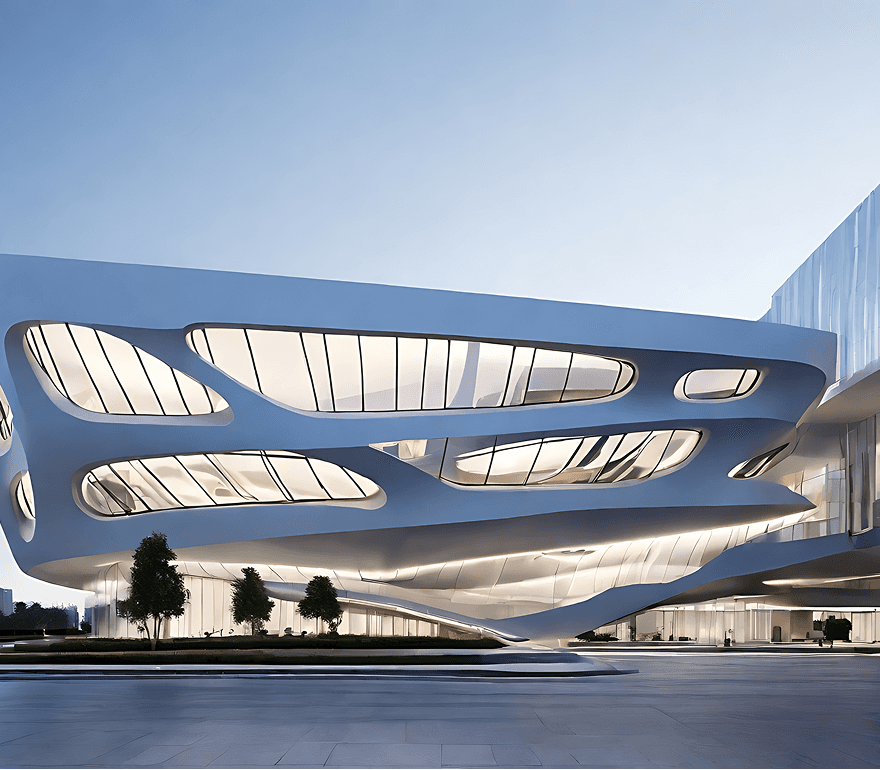
When preparing a major planning submission, property developers often assume that a high-end architectural rendering created for marketing or investor pitch decks can simply be reused in their planning report.
It is an understandable assumption: if a 3D image looks realistic, detailed, and polished, why shouldn't the local council accept it?
However, submitting marketing visuals in place of formal Accurate Visual Representations (AVRs) is a common pitfall that can lead to holding objections, public challenges, or even legal invalidation at a planning inquiry.
Here is why marketing renders and Verified Views serve completely different purposes—and why understanding the distinction is vital for your planning strategy.
1. The Core Difference: Subjective Artistry vs. Verifiable Proof
The fundamental difference comes down to intent and methodology.
A marketing render is designed to sell a vision, whereas a Verified View is designed to provide auditable evidence.
Feature | Marketing Visualisations | Verified Views (AVRs) |
|---|---|---|
Primary Goal | Commercial appeal & investor engagement | Planning compliance & risk mitigation |
Camera Setup | Positioned "by eye" for the most flattering angle | Fixed on-site with OSGB coordinates via GPS/GNSS survey |
Camera Lens | Often wide-angle to make spaces feel larger | Fixed prime lenses (typically 50mm) to preserve scale |
Lighting & Weather | Stylised "golden hour" or dramatic atmospheric light | Realistic, neutral daylight matching real-world site conditions |
Legal Status | Illustrative / Artistic interpretation | Formally audited evidence admissible at public inquiry |
2. Three Reasons Marketing Renders Fail Under Planning Scrutiny
When planning officers, heritage advisors, or local objectors scrutinise a planning application, marketing images are easily dismantled. Here is why they fail technical reviews:
A. Focal Length Distortion ("The Wide-Angle Illusion")
Marketing artists routinely use ultra-wide lenses (20mm–24mm) to fit an entire facade or streetscape into a single frame. While this looks impressive in a brochure, wide lenses stretch building edges and artificially exaggerate foreground depth.
In a planning context, this can lead to accusations of misleading the committee about the true massing and proximity of the development.
B. Unverified Context and Environment
In marketing CGI, surrounding context buildings, street furniture, and mature trees are often added or simplified using stock 3D libraries to make the scene look cleaner.
In an AVR, every surrounding context building, curb line, and tree canopy must match the exact real-world survey control points. Suppressing or altering neighbouring structures voids the technical validity of the image.
C. Stylised Lighting and Reflections
A marketing image might feature dramatic sunset lighting or dark, moody skies to create emotion. However, dramatic lighting can hide building shadow lines or obscure facade materials.
An AVR must simulate daylight accurately based on the exact sun angle at the time the baseline photograph was shot, providing a transparent assessment of light and overshadowing.
3. How Verified Views Protect Your Planning Application
Using Verified Views built strictly to Landscape Institute standards (TGN 06/19) provides your scheme with a legal and technical shield during committee reviews:
Eliminates Subjectivity: When local objectors claim a building will "tower over the street" or "block all light," an AVR provides mathematical proof of the exact silhouette, height, and overshadowing.
Withstands Legal Cross-Examination: At a public inquiry, an Inspector will disregard artistic CGI. An AVR supported by a surveyor’s data sheet and a formal methodology statement stands up to cross-examination by opponent legal teams.
Builds Trust with LPA Officers: Case officers appreciate clear, objective visuals. Providing transparent AVRs shows that your project team is confident in the scheme's design quality and townscape fit.
4. The Smart Strategy: A Dual-Track Visual Approach
Developers do not need to choose between marketing impact and planning rigor—they simply need to deploy them at the right time.
Project Milestone | Recommended Visual Asset | Strategic Objective |
|---|---|---|
Pre-App & Formal Planning | Verified Views (AVRs) | Satisfies LPA officers, townscape consultants, and statutory consultees |
Public Consultation Panels | Blended Approach | Use AVR3s to prove scale, backed by marketing CGIs to explain lifestyle & interior feel |
Investor Sales & Marketing | Marketing Visuals | Drives commercial interest, pre-sales, and branding once planning risk is managed |
Summary: Trust Is Built on Verification
Artistic CGI is fantastic for selling a lifestyle, but Verified Views are built to win planning consent.
By ensuring your townscape report is backed by mathematically verified AVRs, you protect your application from legal challenges, streamline council reviews, and keep your development schedule moving forward.